Choosing a home is hard enough. Then the payment plan arrives, and suddenly you’re comparing schedules, milestones and due dates. Which one protects your cash flow better? Which one protects you if the project slows down? The answer depends on how each plan works and how you earn. This step-by-step guide explains both, with examples from Adani Samsara in Gurgaon. Please treat it as general information, and speak with a financial adviser about your own situation.
Step 1: Understand the Two Plans
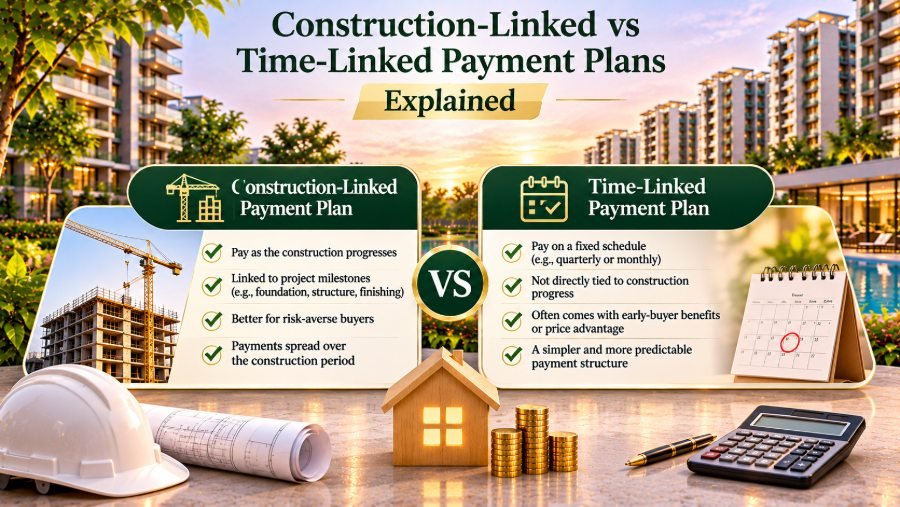
A construction-linked plan ties each instalment to a stage of building work, such as foundation, structure, finishing and possession. A time-linked plan fixes instalments to calendar dates, regardless of how far the work has progressed. Think of the first as paying a builder when each room is finished, and the second as paying a gym membership every month whether you attend or not. Both are legitimate, and each shifts risk differently between you and the developer.
Step 2: See How Construction-Linked Plans Work
Under this plan, the developer raises a demand when it reaches an agreed milestone, so your payments follow visible progress. If work moves slowly, your next instalment waits. That alignment keeps your money closer to what exists on the ground. However, the pace of payments depends on the developer’s pace of construction, which can make your cash planning less predictable. Ask for the milestone list in writing, and check how each stage is defined, because vague wording invites disputes later.
Step 3: See How Time-Linked Plans Work
A time-linked plan sets out dates for each instalment, often with a larger share paid early. This gives you a predictable schedule, which suits buyers who plan around bonuses, maturing investments or a property sale. Some developers offer a discount or a lower price for paying faster. Yet the plan carries a clear risk: if construction lags, you still owe the next payment. So read the delay clause carefully, and compare your payments with the committed possession date.
Step 4: Compare the Risk Side by Side
Here is the key difference. With a construction-linked plan, you pay as the building rises, so your exposure follows progress. With a time-linked plan, you may pay a large amount before much work exists, so your exposure sits higher. Picture a see-saw. Time-linked plans often lean the risk towards the buyer, while construction-linked plans balance it more evenly. Even so, a strong developer with a clean delivery record can make either plan work, which is why the developer’s track record matters as much as the plan.
Step 5: Check the Rules That Protect You
RERA limits what a developer can take before a registered agreement for sale exists, capping any advance at 10% of the cost. It also generally requires developers to place a large share of buyers’ payments in a separate project account. Furthermore, if possession runs late, RERA gives buyers remedies such as a refund with interest, or interest for each month of delay. Verify the project’s registration on the Haryana RERA portal, and confirm how your plan aligns with the registered timeline. When you study Adani Samsara Avasa Sector 63, ask the team for the payment schedule and the possession date in writing.
Step 6: Match the Plan to Your Cash Flow
Now look inward. If your income is steady and you want gradual payments, a construction-linked plan often fits. If you expect a lump sum, such as a business payout or property sale, a time-linked plan may let you pay early and perhaps save on price. If you rely on a home loan, check how your bank releases funds, because lenders usually disburse against construction stages. A mismatched schedule can leave you scrambling for the difference. Adani Samsara Ivana, which lists 4 BHK homes of around 1,702 sq. ft., makes a handy example: ask how its instalments would sit alongside your loan.
Step 7: Read the Fine Print and the Extras
Plans hide details in the margins. Check what happens if you pay late, how interest is calculated and whether the developer can change the schedule. Confirm which charges sit inside each instalment, such as GST, parking and club membership. Then add everything to your own spreadsheet. If you are considering Adani Samsara Arya, which lists 3 and 4 BHK homes between 3,150 and 4,050 sq. ft. in neighbouring Sector 60, request a complete cost sheet before you decide. Meanwhile, compare the Adani Samsara Avasa photos with the progress on site, because milestone claims should match what you can see.
Step 8: Test the Plan with a Simple Scenario
Finally, stress-test your choice. Imagine possession slips by six months. How would your cash flow look under each plan? Imagine your income dips for a quarter. Could you still meet the next instalment? A plan that survives both scenarios is a plan you can trust. Moreover, speak with an independent adviser and a property lawyer before signing. Adani Samsara Avasa offers 3, 4 and 5 BHK floors from about 1,689 to 3,060 sq. ft., so run the numbers for your exact unit. For more on the Avasa project, see its overview of low-rise luxury at Adani Samsara Avasa Sector 63.
Final Thoughts
Construction-linked plans follow the building, while time-linked plans follow the calendar. Neither is automatically better, because the right fit depends on your income, your loan and your risk tolerance. Ask for the schedule in writing, check the possession date, test your cash flow and verify the registration. Do that, and Adani Samsara becomes a purchase you can plan with confidence. When you are ready, explore the full range of Adani residential projects in Gurgaon and ask the sales team which payment options apply.
Frequently Asked Questions
1) What Is a Construction-Linked Payment Plan?
It is a plan where each instalment is due when the developer reaches a defined construction milestone, such as completing a slab or finishing work.
2) What Is a Time-Linked Payment Plan?
It is a plan where instalments fall due on fixed dates, regardless of construction progress. It offers predictable payments but can expose you to more risk if work slows.
3) Which Plan Is Safer for the Buyer?
A construction-linked plan generally balances risk better, because payments follow progress. Even so, the developer’s track record and the agreement’s terms matter just as much.
4) Can I Change My Payment Plan Later?
That depends on the developer and the agreement. Ask before you book, and get any change confirmed in writing.
5) How Does a Home Loan Work with These Plans?
Banks usually release funds against construction stages. Check that your loan disbursement schedule matches your instalments, so you do not face a funding gap.
6) Which Configurations Does Adani Samsara Avasa Offer?
Adani Samsara Avasa offers 3, 4 and 5 BHK floors, ranging from about 1,689 to 3,060 sq. ft. Ask the sales team which payment plans apply.
7) How Large Are the Homes in Adani Samsara Ivana and Adani Samsara Arya?
Adani Samsara Ivana features 4 BHK homes of around 1,702 sq. ft. Adani Samsara Arya, in Sector 60, offers 3 and 4 BHK homes between 3,150 and 4,050 sq. ft.