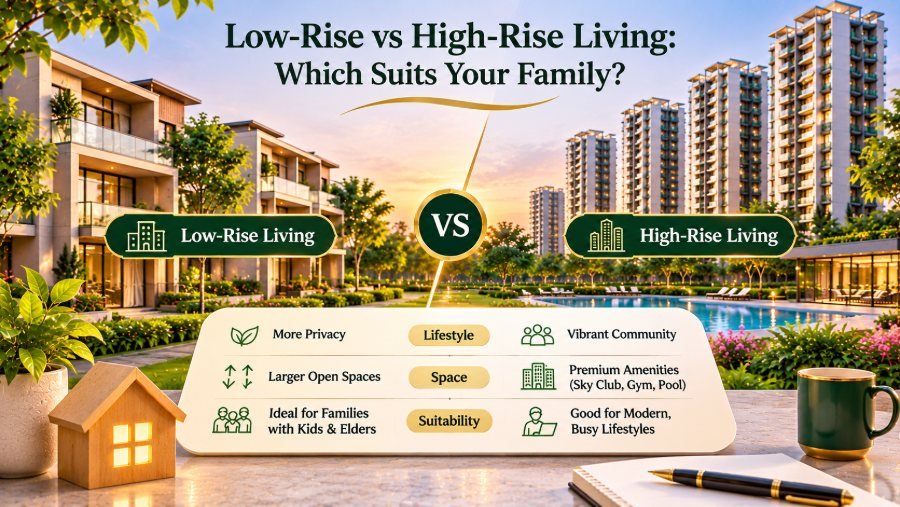
Ask ten Gurgaon families where they want to live, and you will hear two very different answers. Some dream of a skyline view from the 25th floor. Others picture a quiet landing shared with just a few neighbours. So which choice is right for you? The honest answer depends on how your family lives, not on which option sounds more impressive. This step-by-step guide helps you decide, with examples from Adani Samsara in Gurgaon.
Step 1: Know What the Terms Mean
There is no single legal line between the two. In general, low-rise means a building of a few storeys, often with a limited number of homes per floor and per block. High-rise means a tall tower, usually served by multiple lifts and housing many more families. Think of it as the difference between a neighbourhood lane and a busy main street. Both can be wonderful, yet they feel quite different every day. So before you compare prices, compare the way each format shapes your routine.
Step 2: Weigh Privacy and Density
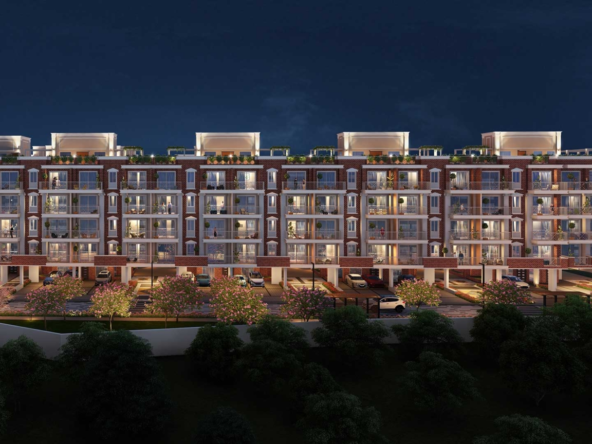
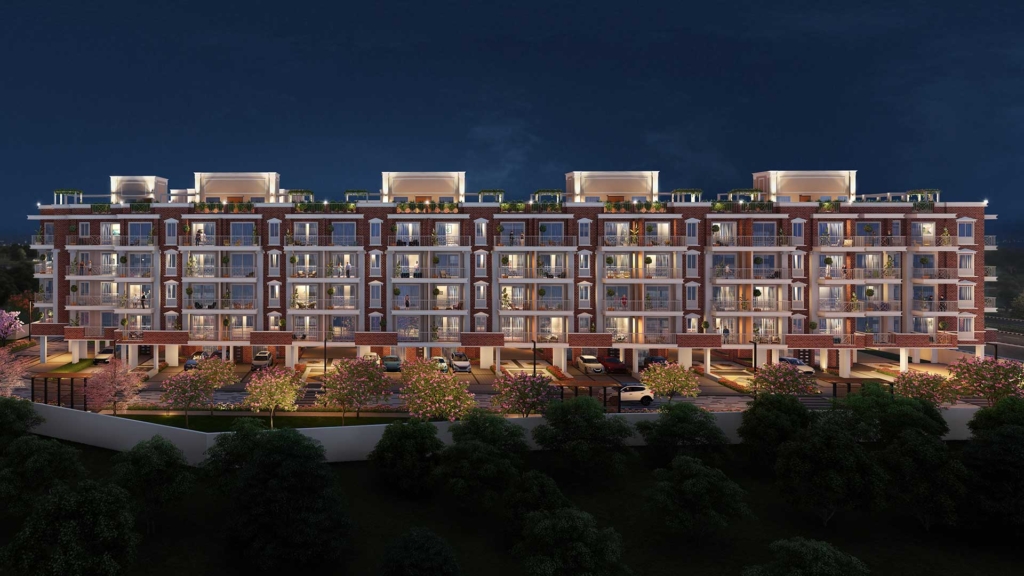
Privacy often decides the matter. In a low-rise block, you share walls and stairs with fewer households, so you tend to know your neighbours and hear fewer strangers. A tall tower houses many more families under one roof, which brings more activity at the lobby, the lifts and the car park. If you value quiet landings and a close-knit feel, low-rise has the edge. Adani Samsara Avasa Sector 63 is promoted as low-rise luxury, and its 3, 4 and 5 BHK floors range from about 1,689 to 3,060 sq. ft. Confirm the exact height and the number of homes per floor with the sales team.
Step 3: Think About Light, Air and Views
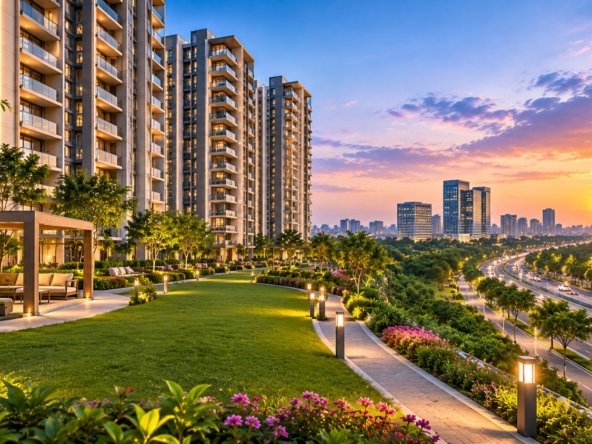
Views sell towers, and they deserve their reputation. Higher floors can offer open skylines, good breeze and plenty of sunlight. Low-rise homes counter with a gentler outlook, such as trees, gardens and landscaped courtyards at eye level. Which would you rather see from your breakfast table: distant rooftops or a leafy lawn? Remember that light depends on orientation and the buildings around you, not just height. Therefore, check the facing of your specific unit, wherever it sits, and visit at different times of day.
Step 4: Test Everyday Convenience
Convenience shows up in small moments. In a tall tower, you rely on lifts, and waiting times can stretch during peak hours. If you live on a high floor, a lift breakdown becomes a genuine inconvenience, especially with young children, elderly parents or heavy shopping. A low-rise home often keeps you closer to the ground, which makes quick trips to the park, the car or the gate easier. Families with toddlers or grandparents frequently value that simplicity. Meanwhile, young professionals who rarely linger at home may not mind the lift at all.
Step 5: Compare Amenities and Shared Costs
Large towers often sit in big communities with extensive facilities such as clubhouses, pools and sports courts. Smaller low-rise projects may offer a lighter list, yet fewer households share each amenity. That means less crowding at the pool on a Sunday morning. Costs follow a similar logic. Tall buildings need more lifts, systems and staff, so maintenance can run higher, while low-rise upkeep varies by project. Ask both formats the same question: how many families share each facility, and how much do I pay each month? When you browse the Adani Samsara Avasa photos, notice the clubhouse and landscaping, then ask how large the community around them will be.
Step 6: Think About Noise, Dust and Air
Street noise and dust usually fade with height so that a higher floor can feel calmer from traffic. On the other hand, a low-rise setting often wraps you in greenery, which softens sound and cools the surroundings. Neither format guarantees a peaceful home. Instead, the location, the road layout and the landscaping matter just as much. Therefore, stand on the balcony or in the courtyard during rush hour and listen. Your ears will tell you more than any brochure. Likewise, compare the Adani Samsara Avasa photos with what you see on site, because renders always look quieter than real life.
Step 7: Match the Home Size to Your Family
Format shapes space. Larger families often prefer roomy layouts with separate zones, which suits the bigger plans in both formats. Adani Samsara Arya, in neighbouring Sector 60, lists 3 and 4 BHK homes between 3,150 and 4,050 sq. ft., so it appeals to families who want generous space. Adani Samsara Ivana lists 4 BHK homes of around 1,702 sq. ft., which suits families who prefer an efficient four-bedroom plan. Meanwhile, Adani Samsara Avasa gives you the widest range, from 3 to 5 BHK. Compare carpet area, not just the quoted size, and picture your furniture before you decide. Adani Samsara Ivana and Adani Samsara Arya show how one collection can serve very different households.
Step 8: Check the Ownership and Fine Print
Finally, look beyond lifestyle. Ask how ownership works for your unit, including the land share, parking and common areas. Confirm the RERA registration, the possession timeline and the full cost sheet and read the builder-buyer agreement carefully with a property lawyer. Then think about resale. Both formats can resell well when location, quality and upkeep are strong, but buyer preferences differ. A family-focused low-rise might appeal to end users, while a tower with a skyline might appeal to others. So weigh your plans for the next ten years, not just the next one.
Final Thoughts
Low-rise living offers privacy, calm and a closer connection to the ground. High-rise living offers views, scale and often a bigger amenity package. Neither wins by default, because the right choice follows your family’s routine, ages and priorities. Write down what matters most, visit each format at different times and ask direct questions. Do that, and Adani Samsara becomes much easier to judge. To compare more options, explore the full range of Adani residential projects in Gurgaon and book a site visit.
Frequently Asked Questions
1) What Is the Main Difference Between Low-Rise and High-Rise Living?
Low-rise buildings have only a few storeys and usually fewer homes per block. High-rise buildings are tall towers with many more families. The two formats differ in privacy, lift dependence, amenities and views.
2) Which Is Better for Families with Young Children or Elderly Parents?
Many families find low-rise easier, because fewer stairs and shorter trips make daily routines simpler. However, a well-maintained tower with reliable lifts can also work. Consider your family’s needs and visit the site.
3) Is Low-Rise Living More Private Than High-Rise?
Generally, yes, since fewer households share the entrance, stairs and common areas. Always confirm the number of homes per floor and per block for your specific project.
4) Is Adani Samsara Avasa Sector 63 a Low-Rise Project?
Adani Samsara Avasa Sector 63 is promoted as low-rise luxury. Please confirm the exact building height and layout details with the sales team.
5) Which Configurations Does Adani Samsara Avasa Offer?
Adani Samsara Avasa offers 3, 4 and 5 BHK floors, ranging from about 1,689 to 3,060 sq. ft. Confirm current availability and the carpet area of each unit.